الرئيسية
» كيف
»
How to Clean a Refrigerator Water Dispenser Without Damaging It
How to Clean a Refrigerator Water Dispenser Without Damaging It
A refrigerator water dispenser is usually safest to clean from the outside in: wash the removable drip tray, wipe the dispenser cavity and lever with mild soap and water, gently clean the accessible nozzle area, remove mineral scale only with a cleaner approved for your finish, then rinse, dry, and test the dispenser. The important limit is the internal water tube. Do not assume it needs a routine vinegar or bleach flush. GE Appliances specifically says the dispenser water tube does not require routine cleaning and recommends service if the tube itself needs cleaning.
This guide focuses on the parts a homeowner can normally reach without disassembling the water system. Refrigerator designs vary, so your owner's manual takes priority whenever it gives model-specific cleaning or filter instructions.
What you need
Item
Use
Notes
Two clean microfiber cloths
Washing and drying
A soft cloth is less likely to scratch coated or stainless surfaces than abrasive pads.
Mild dish soap or mild detergent
General cleaning
Whirlpool and LG both recommend mild soap or detergent for dispenser-area cleaning.
Warm water
Diluting soap and rinsing
Keep water away from electronic controls; apply liquid to the cloth instead of spraying the panel.
Cotton swabs or a small, soft toothbrush
Accessible nozzle details
Use gently around the visible outlet; do not force tools deep into the water tube.
White vinegar, only if your finish allows it
Mineral deposits
GE allows undiluted vinegar on dispenser deposits, but the owner's manual should decide what is safe for your model.
Four common misconceptions to clear up first
“The internal water line should be flushed with vinegar every few months.”
Verified: that is not a universal manufacturer recommendation. GE Appliances' dispenser-cleaning guidance says the water tube does not require routine maintenance or cleaning and recommends service if the tube needs cleaning. Action: clean the reachable dispenser parts unless your exact owner's manual gives a specific internal sanitation procedure.
“White crust around the outlet must be mold.”
Sometimes false: evaporated water can leave mineral residue. LG's dispenser support page explains that minerals such as calcium and magnesium can dry into white deposits around the outlet. That does not prove every white deposit is harmless, because appearance alone cannot identify every residue. Action: wipe away dry scale and recheck the area. If material is slimy, fuzzy, colored, keeps returning rapidly, or is inside an inaccessible water path, stop guessing and consult the manufacturer or a service technician.
“Stronger cleaners are always more sanitary.”
Verified: several manufacturers steer users toward mild cleaners and warn about harsh chemicals or direct spraying. Whirlpool recommends warm water with mild soap or detergent for the dispenser exterior, while Samsung warns that harsh chemicals can damage refrigerator finishes. Action: start with mild soap and water; use a stronger product only when your refrigerator's care instructions explicitly allow it.
“Bad-tasting water means the nozzle is dirty.”
Depends on the cause: taste or odor can also be related to the filter, a new installation, trapped air after filter service, or the household water supply. Samsung's dispenser troubleshooting guidance tells users to flush a newly installed system and to check or replace the filter when taste changes. Action: clean the dispenser, but also check the filter status and compare the refrigerator water with the household cold-water supply if the problem remains.
How to clean a refrigerator water dispenser step by step
1. Check the model instructions and prevent accidental dispensing
Look up the refrigerator model number and confirm whether the drip tray, dispenser pad, or nozzle cover is designed to come off. If the dispenser has a control lock, activate it before cleaning. On some models, opening the refrigerator or freezer door also prevents dispensing; on others it does not. If your manual calls for disconnecting power before a particular service step, follow it.
For routine exterior cleaning, you normally do not need to disconnect the household water line. Avoid unnecessary plumbing work because fittings, valves, and model layouts vary.
Prepare mild cleaning supplies and disable the dispenser controls before wiping around the lever or outlet.
2. Remove and wash the drip tray or grille if it is designed to come out
Lift or slide out the removable tray according to the manual. Wash it with warm water and a small amount of mild dish soap, using a soft cloth or the nonabrasive side of a sponge. Rinse thoroughly. Do not force a tray that does not release easily; some models use clips or a fixed shelf.
Water left on the spill shelf can dry into mineral spots. GE recommends wiping spills promptly for that reason.
Wash a removable drip tray with mild dish soap and water, then rinse it completely before reinstalling.
3. Wipe the dispenser cavity, lever, and pad
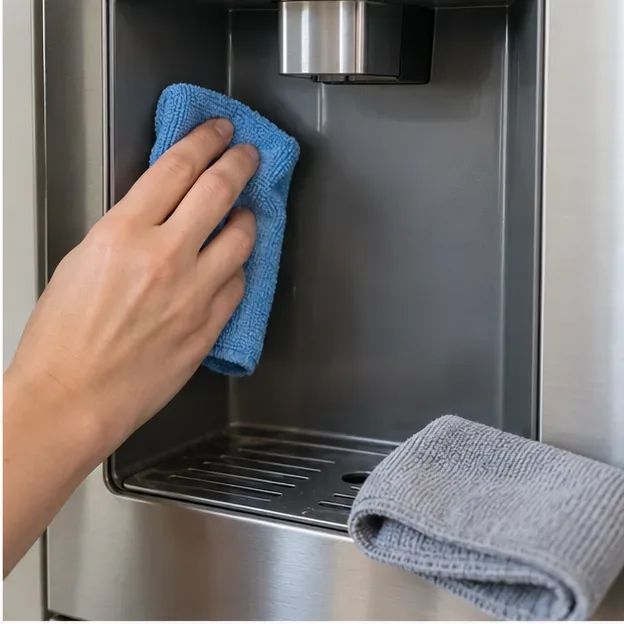
Dampen a microfiber cloth with warm water and a little mild detergent. Wring it out so it is damp rather than dripping, then wipe the sides and back of the dispenser cavity, the glass or cup lever, and any removable pad your manual says can be washed.
لا ترش المنظف مباشرةً على لوحة التحكم. توصي إرشادات دعم إل جي باستخدام منشفة ناعمة مبللة بالماء ومنظف معتدل لإزالة أي بقايا حول ذراع موزع المنظف، وتحذر من مسح الماء على لوحة التحكم. وبالمثل، تنصح سامسونج بوضع المنظف على قطعة قماش بدلاً من رشه مباشرةً على سطح الجهاز.
استخدم قطعة قماش مبللة من الألياف الدقيقة على تجويف الموزع والرافعة بدلاً من رش المنظف في منطقة التحكم.
4. نظف مخرج الماء الظاهر برفق
استخدم قطعة قطن مبللة أو فرشاة أسنان صغيرة ونظيفة وناعمة لإزالة البقايا حول فوهة موزع سائل التبريد والفتحة التي يسهل الوصول إليها. تشير إرشادات صيانة ثلاجات إل جي لعام 2026 تحديدًا إلى استخدام فرشاة صغيرة أو قطعة قطن لتنظيف فوهة الموزع من الداخل والخارج.
وضّح الفرق جيدًا: تنظيف الفوهة التي يمكن الوصول إليها لا يُشبه إدخال فرشاة أو سلك أو خل أو مُعقّم بعمق في أنبوب الماء الداخلي. إذا امتدّت الرواسب إلى ما هو أبعد من نطاق الوصول الآمن، فإنّ الصيانة هي الخطوة التالية الأكثر أمانًا.
قم بتنظيف منطقة الفوهة التي يمكن الوصول إليها برفق؛ لا تدفع الأدوات بعمق في خط الماء الداخلي.
5. لا تعالج الرواسب المعدنية إلا في الحالات التي تسمح بها التشطيبات النهائية.
إذا خلّف الماء العسر طبقةً أو قشرةً بيضاء على رفّ التصريف، جرّب أولاً قطعة قماش مبللة من الألياف الدقيقة. أما بالنسبة للرواسب العنيدة، فتنصح شركة GE Appliances بترك الخل غير المخفف على رواسب موزع الصابون حتى تتفكك ، وعادةً ما تكفي 30 دقيقة وفقًا لإرشاداتها. كما تحذر GE من استخدام خليط حمض الستريك على موزعات الصابون المصنوعة من الفولاذ المقاوم للصدأ.
يختلف هذا الأمر باختلاف طراز الثلاجة ونوعها، وليس قاعدة عامة لجميع الثلاجات. إذا كان دليل المستخدم يمنع استخدام الخل أو يحدد منظفًا خاصًا، فاتبع التعليمات الواردة فيه. لا تخلط الخل مع مبيض الكلور أبدًا.
يمكن في كثير من الأحيان إزالة البقع المعدنية من رف الانسكاب باستخدام طريقة معتمدة من الشركة المصنعة؛ تأكد من توافقها مع نوع الطلاء الخاص بك أولاً.
6. اشطف بقايا المنظف وجفف المنطقة تماماً
امسح الأسطح النظيفة بقطعة قماش ثانية مبللة بالماء، ثم جففها بقطعة قماش نظيفة من الألياف الدقيقة. يُعدّ التجفيف مهماً حول قنوات الثلج ورفوف الانسكاب: تشير شركة جنرال إلكتريك إلى أن قناة الثلج المبللة قد تُشجع على تراكم الثلج مما يعيق تدفقه.
توصي شركة ويرلبول باستخدام قطعة قماش نظيفة من الألياف الدقيقة أو قطعة قماش ناعمة لتجفيف الجزء الخارجي من موزع الصابون، وتحذر من أن المناشف الورقية قد تخدش بعض الطلاءات أو تُبهت لونها. إذا كنت غير متأكد من مدى حساسية الطلاء، فإن استخدام الألياف الدقيقة هو الخيار الأمثل.
بعد الشطف، جفف تجويف الموزع والرافعة ومنطقة الصينية حتى لا تتبقى بقايا الماء والمنظف.
أعد تركيب أي صينية أو شبكة أو وسادة بعد جفافها تمامًا. افتح قفل موزع الماء، وضع كوبًا نظيفًا أسفل فتحة التصريف، ثم صب الماء. تأكد من أن ذراع التوزيع يعمل بشكل طبيعي، وأن تدفق الماء ثابت، وأنه لا يوجد أي تسريب غير متوقع ناتج عن ذراع عالق أو جزء غير مثبت بإحكام.
لا يتطلب التنظيف الروتيني للأسطح بالضرورة شطف كميات كبيرة من الماء. عادةً ما يرتبط الشطف بكميات كبيرة بعملية التركيب أو استبدال الفلتر، ويجب اتباع تعليمات الطراز.
اختبر الموزع بعد إعادة تجميعه وتأكد من أن الماء يتدفق بشكل طبيعي وأن الرافعة تعود إلى مكانها دون أن تعلق.
8. إذا استمر الطعم أو الرائحة أو بطء التدفق، فتحقق من الفلتر ودليل الصيانة.
إذا استمر الطعم غير المستساغ بعد تركيب الفلتر المناسب وتنظيفه، قارن ماء الثلاجة بماء الصنبور البارد. قد يكون سبب المشكلة التي تؤثر على كليهما هو مصدر المياه المنزلي وليس الثلاجة نفسها. إذا لاحظت وجود شوائب داخل الأنابيب التي يصعب الوصول إليها، أو تسريبًا متكررًا، أو تعطل موزع المياه، أو انخفاضًا مستمرًا في تدفق المياه بعد إجراء الفحوصات الأساسية، فاتبع إرشادات الصيانة الموصى بها من الشركة المصنعة بدلًا من تفكيك نظام المياه.
عند استمرار مشاكل الطعم أو التدفق، تحقق من صحة الفلتر وتعليمات الاستبدال والتنظيف الخاصة بالطراز.
قائمة التحقق من التنظيف السريع
استخدم قفل الموزع أو الطريقة الموصى بها من قبل الطراز لمنع التوزيع العرضي.
امسح تجويف الموزع والرافعة بقطعة قماش مبللة من الألياف الدقيقة.
استخدم قطعة قطن أو فرشاة ناعمة فقط على منطقة الفوهة المرئية والتي يسهل الوصول إليها.
قم بمعالجة الترسبات المعدنية فقط باستخدام طريقة معتمدة لطلاء الموزع.
لا ترش المنظف مباشرة على أجهزة التحكم الإلكترونية.
اشطف وجفف جميع الأسطح التي يمكن الوصول إليها قبل إعادة التجميع.
لا تقم بحقن الخل أو المبيض أو بيروكسيد الهيدروجين أو أي منظف آخر في أنبوب الماء الداخلي إلا إذا كانت تعليمات الشركة المصنعة الخاصة بك تتطلب ذلك صراحةً.
تحقق من فلتر المياه وإمدادات المياه المنزلية إذا استمرت مشاكل الطعم أو الرائحة أو التدفق.
كم مرة يجب تنظيف موزع الصابون؟
لا توجد فترة تنظيف محددة ومعتمدة تناسب جميع الثلاجات. تنصح شركة جنرال إلكتريك بتنظيف موزع سائل الغسيل بانتظام ومسح أي انسكابات فورًا؛ بينما تقدم شركتا ويرلبول وسامسونج طرق تنظيف دون تحديد جدول زمني موحد لجميع الموديلات. القاعدة العملية هي مسح أي قطرات فور حدوثها وتنظيف الموزع عند ملاحظة أي بقايا أو بقع معدنية أو لزوجة أو شوائب. اتبع دليل المستخدم إذا كان يتضمن جدولًا زمنيًا محددًا.
متى يجب التوقف عن التنظيف وطلب الخدمة؟
توقف عند النقطة التي يتحول فيها التنظيف إلى إصلاح للسباكة أو الأجهزة. تكون الصيانة ضرورية عندما يبدو أنبوب الماء الداخلي ملوثًا، أو يستمر ذراع التوزيع في العمل بعد تحريره، أو يتسرب الماء من داخل وحدة التوزيع، أو يبقى التدفق منخفضًا بشكل غير طبيعي بعد فحص الفلتر ومصدر المياه، أو عندما يتطلب الأمر تفكيك أحد المكونات بما يتجاوز خطوات الصيانة المذكورة في الدليل.
يُعدّ تحديد حدود الجهاز أمرًا بالغ الأهمية، إذ يجمع موزع المياه بين أنابيب مياه الشرب والصمامات وأجهزة التحكم الكهربائية ومواد التشطيب الخاصة بكل نوع. تنظيف السطح بسيط، أما إجراءات التعقيم الداخلية فهي خاصة بكل طراز ولا ينبغي الارتجال فيها.